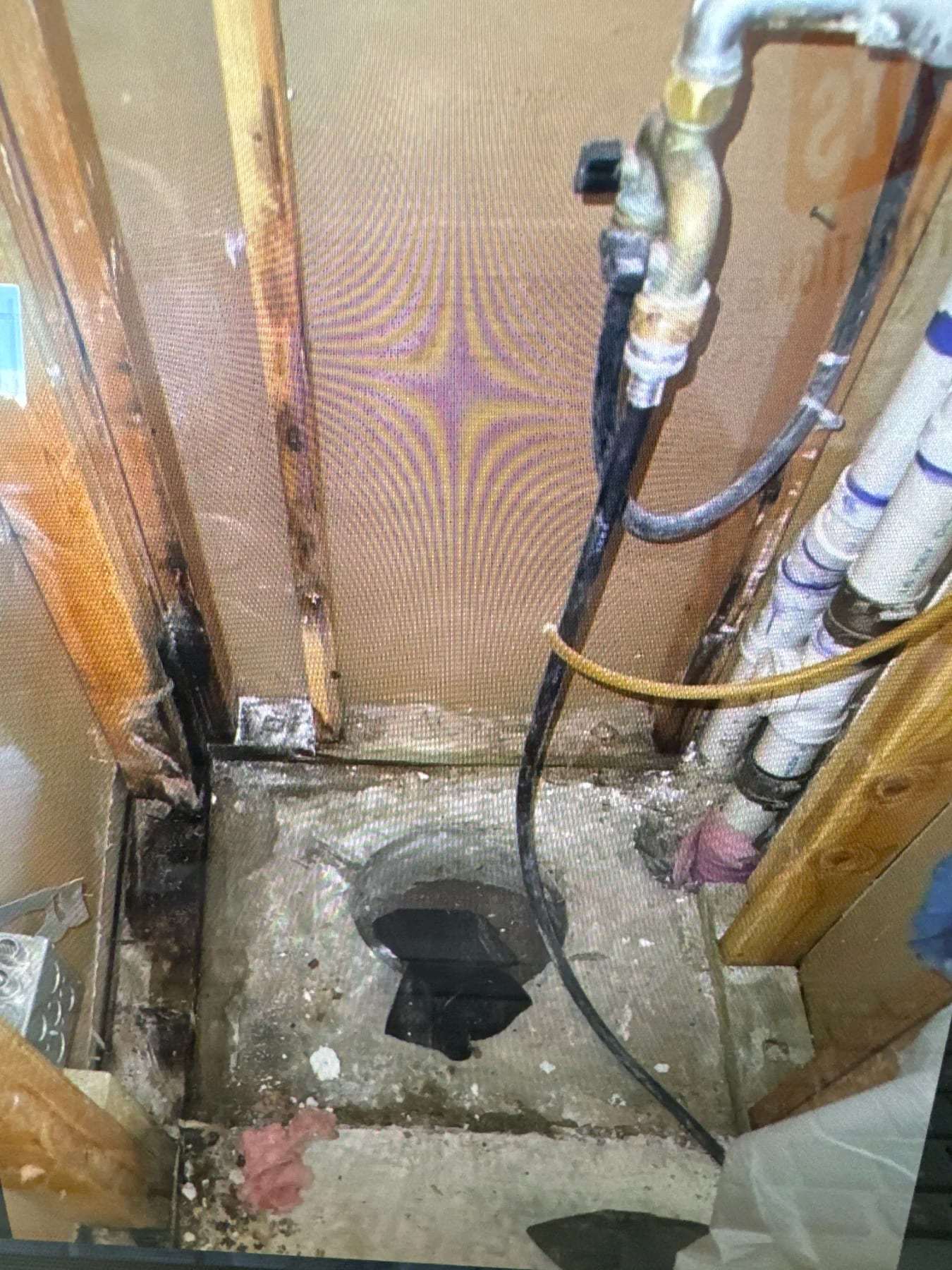
Supply and drain plumbing inside an opened wall above a cut subfloor. Illustrative only: this photo is not from a job tied to this site or a specific address.
The situation
Illustrative example. Not a real job or customer.
A hypothetical 1920s brick bungalow has its kitchen sink on the north exterior wall, with supply lines running up through an uninsulated cavity from the unfinished part of the basement. After two nights well below zero, the cold tap at the kitchen sink runs slowly, then stops. The owners leave for work assuming it will come back when the weather warms.
- On the afternoon of the thaw, the ice plug melts. Water sprays from a split in the copper line inside the wall, behind the lower cabinet.
- Water fills the cabinet base, runs across the oak floor and drains through gaps along the baseboard into the basement below.
- A neighbor with a key, asked to check the house, notices water dripping from the basement ceiling joists and finds the main shutoff at the front basement wall. The gate valve is stiff but closes.
- The owners return, photograph the kitchen and basement, and report the loss to their insurer that evening.
- A plumber opens the wall behind the sink cabinet, finds the split, and reroutes the line slightly inward with insulation, noting the cause as freezing.
- A drying contractor maps moisture: kitchen floor, the lower wall cavity, the cabinet base and the basement ceiling joists below are all wet. The plaster above the counter is damp but firm.
- The sink base cabinet is removed so the wall and floor beneath can dry. The plaster wall is vented rather than torn out after a hollow-tap check finds it still bonded. The oak floor is dried with mats, with readings taken daily.
Because the neighbor reached the shutoff within a short time and drying began the same evening, the hardwood flattened as it dried and most of the plaster stayed. The cabinet base and a section of basement ceiling insulation were replaced. The main takeaway: a stopped faucet in a cold snap is a warning to plan for the thaw, not to wait it out.
Decision points in this scenario
- IfThe faucet stopped on a cold nightThenOpening the cabinet, warming the wall gently and locating the main before leaving could have prevented or limited the break.
- IfNobody was home on the thaw dayThenHaving a neighbor with a key and instructions made the difference between hours and minutes of flow.
- IfThe plaster was wet but firmThenVenting and monitoring was a reasonable choice over removal, but only after testing in an older home and listening for detached areas.
- IfThe line was in an exterior wallThenThe plumber's reroute addressed the cause, so the same pipe is less likely to freeze next winter.
What helped, in hindsight
General information for Denver, not a quote or professional advice. In an emergency, call 911.