How a typical freeze-and-thaw event unfolds
The pattern below is general, but it matches how many Front Range cold snaps play out. Timing varies with wind, sun exposure and how the pipe is insulated.
- Days before
- Weather is mild, sometimes sunny and in the 50s. Garage doors stay open, crawlspace vents stay uncovered and nobody thinks about the hose bib.
- Front arrives
- Temperatures can fall dramatically within hours as cold air spills down from the north. Wind drives that air into rim joists, soffits and gaps around pipes that pass through exterior walls.
- First cold night
- Water in the most exposed run, often a kitchen or bathroom line on a north or west wall, starts to freeze. Flow at that faucet slows or stops. This is the moment to act.
- Second and third nights
- If the cold holds, ice keeps forming. Pressure builds between the ice plug and the closed faucet, and the pipe can split somewhere other than where the ice is.
- Thaw day
- Sun and warming air melt the plug. Water now flows through the split under full pressure, often inside a wall or ceiling where nobody can see it at first.
- Hours after thaw
- Stains, dripping light fixtures, a hissing sound or a sudden drop in water pressure reveal the break. Shutting off the main valve stops the damage from growing.
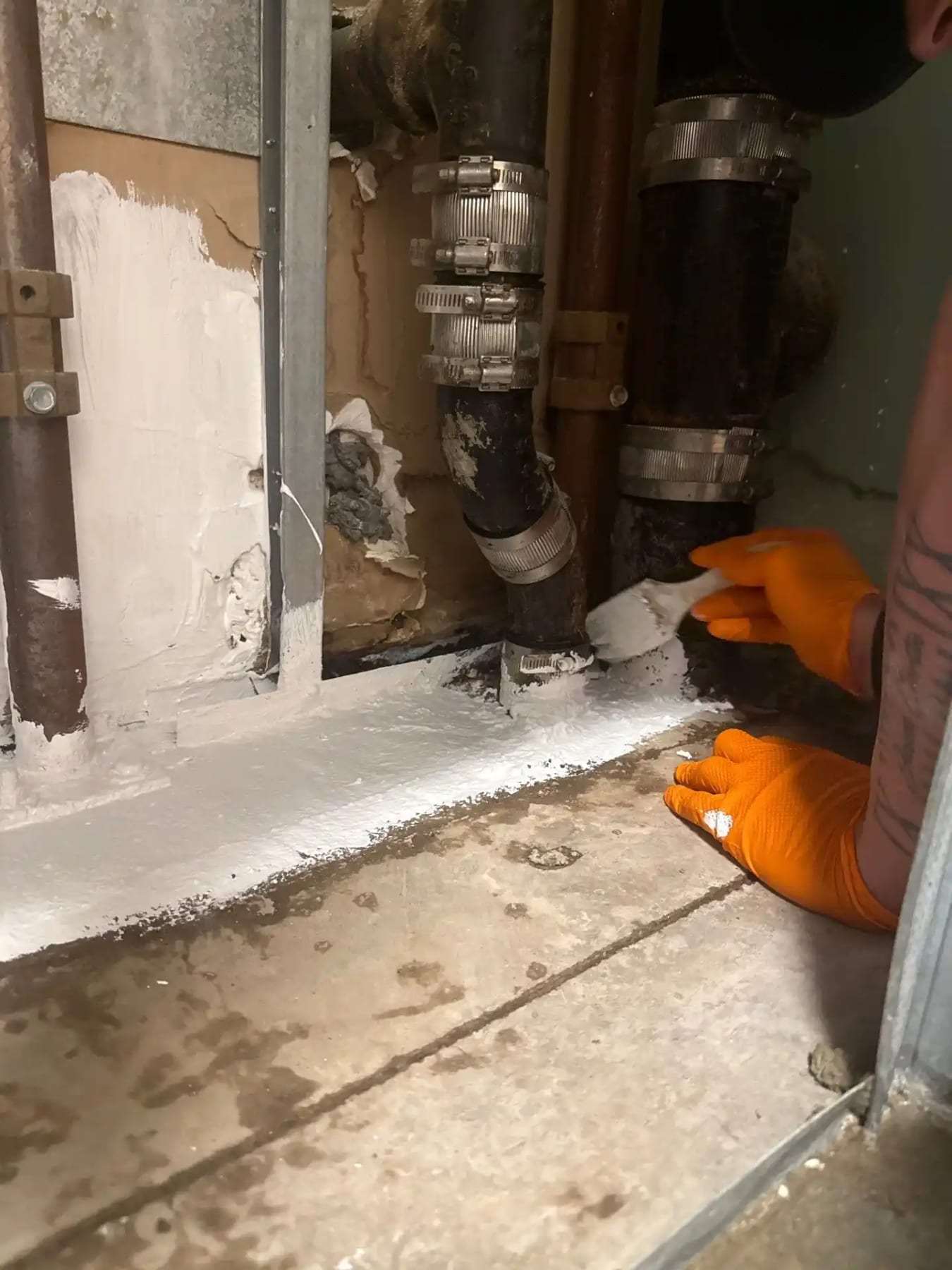
Gloved hand beside corroded supply fittings inside an opened wall. One example of what this stage can look like; it is not a job connected to this site.
Why the mild weeks make it worse
In places with long, steady winters, people build habits around the cold: heat tape stays plugged in, crawlspace vents get closed in November, and outdoor hoses come off early. Denver's alternating warm spells break those habits. A homeowner who winterized in October may have reopened a garage, removed foam covers or turned the thermostat down for a sunny week, and the next front arrives before anything is put back.
Older Denver housing adds to the risk. Many pre-war homes have supply lines running through uninsulated exterior walls, under enclosed porches or along the rim joist of an unfinished basement. Post-war ranches often put laundry and water heaters in attached garages. Neither layout was designed with today's insulation expectations.
The most frustrating part for many households is the delay. The pipe broke during the cold, but water does not escape until the ice melts, which can be a day or more later, sometimes while people are at work. That is why the thaw is the moment to be home or have someone check.
Before the next front reaches Denver
Forecasts usually give a day or two of warning. Use it.
Common questions
- How cold does it have to be for pipes to freeze in Denver?
- There is no single number. Exposed pipes in a windy crawlspace can freeze in conditions that would not affect a line in a heated interior wall. Duration matters as much as the low temperature, so several nights well below freezing are the main concern.
- Why did my pipe leak on a warm afternoon?
- The split probably formed while the pipe was frozen. Ice held the water back until the sun and rising temperatures melted it, and then water escaped through the crack under normal pressure.
General information for Denver, not a quote or professional advice. In an emergency, call 911.