Denver sits in a semi-arid climate at roughly a mile of elevation, and outdoor humidity is often low compared with much of the country. Wet laundry dries quickly outside, and people reasonably expect the same for wet walls. But most burst pipes happen in winter, when windows are closed and the house is a closed box. Water evaporating from carpet, drywall and framing raises indoor humidity, and that moisture has to go somewhere.
If it is not removed, damp air migrates to the coldest surfaces in the house: exterior walls, window glass, attic sheathing and closets on north walls. Condensation and new damage can appear in rooms that never got wet.
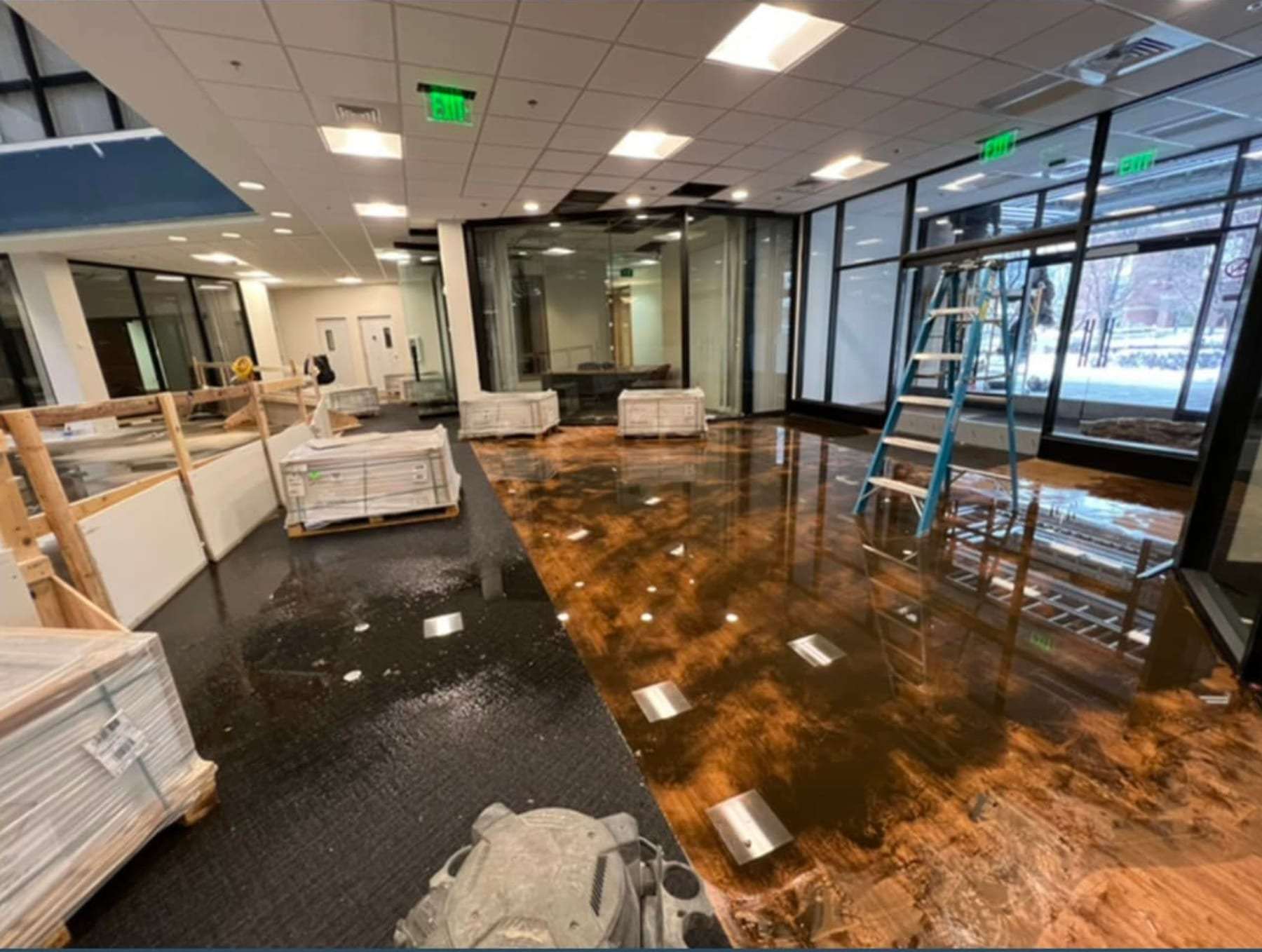
Flooded commercial office floor with standing water during cleanup. Illustrative image of the process; it does not document a job done for this site.
The basic physics
- Air movers
- Speed evaporation from wet surfaces
- Dehumidifiers
- Remove the evaporated water from the air
- Heat
- Warmer air holds more moisture and speeds evaporation
- Outdoor air
- Useful only when it is drier and conditions allow
- End point
- Readings that match the dry standard
Where Denver's climate helps and where it does not
Helps
- Dry outdoor air can sometimes be used to ventilate when temperatures allow
- Lower background humidity can make dehumidifiers more effective
- Surface water on hard materials evaporates readily
Does not help much
- Sealed winter houses trap the moisture that evaporates
- Dense materials like plaster, hardwood and slabs dry from the inside slowly
- Wet insulation and closed cavities stay wet without air reaching them
- Opening windows in a cold snap can freeze other pipes
What to watch during drying
Check daily readings
Ask for numbers on the marked points and on room humidity.
Look for condensation
Fogged windows or damp spots on cold walls mean humidity is too high.
Keep doors and containment as set
Equipment is placed for a reason. Moving it or opening containment can slow the work.
Do not stop early
Surfaces can feel dry before framing and subfloor are. Equipment should come out when the readings say so.
Common questions
- Will running my furnace hotter dry things faster?
- Warmth does speed evaporation, and keeping the house comfortably heated is reasonable. Cranking the heat without dehumidification mostly moves water from the walls into the air, where it can condense somewhere else. Ask the contractor what temperature they want the house kept at while equipment runs.
- Can a household dehumidifier do the job?
- For a small, contained spill it may help. After a burst pipe that soaked walls or floors, household units usually cannot keep up, which is why drying contractors bring larger commercial dehumidifiers and measure the results.
General information for Denver, not a quote or professional advice. In an emergency, call 911.