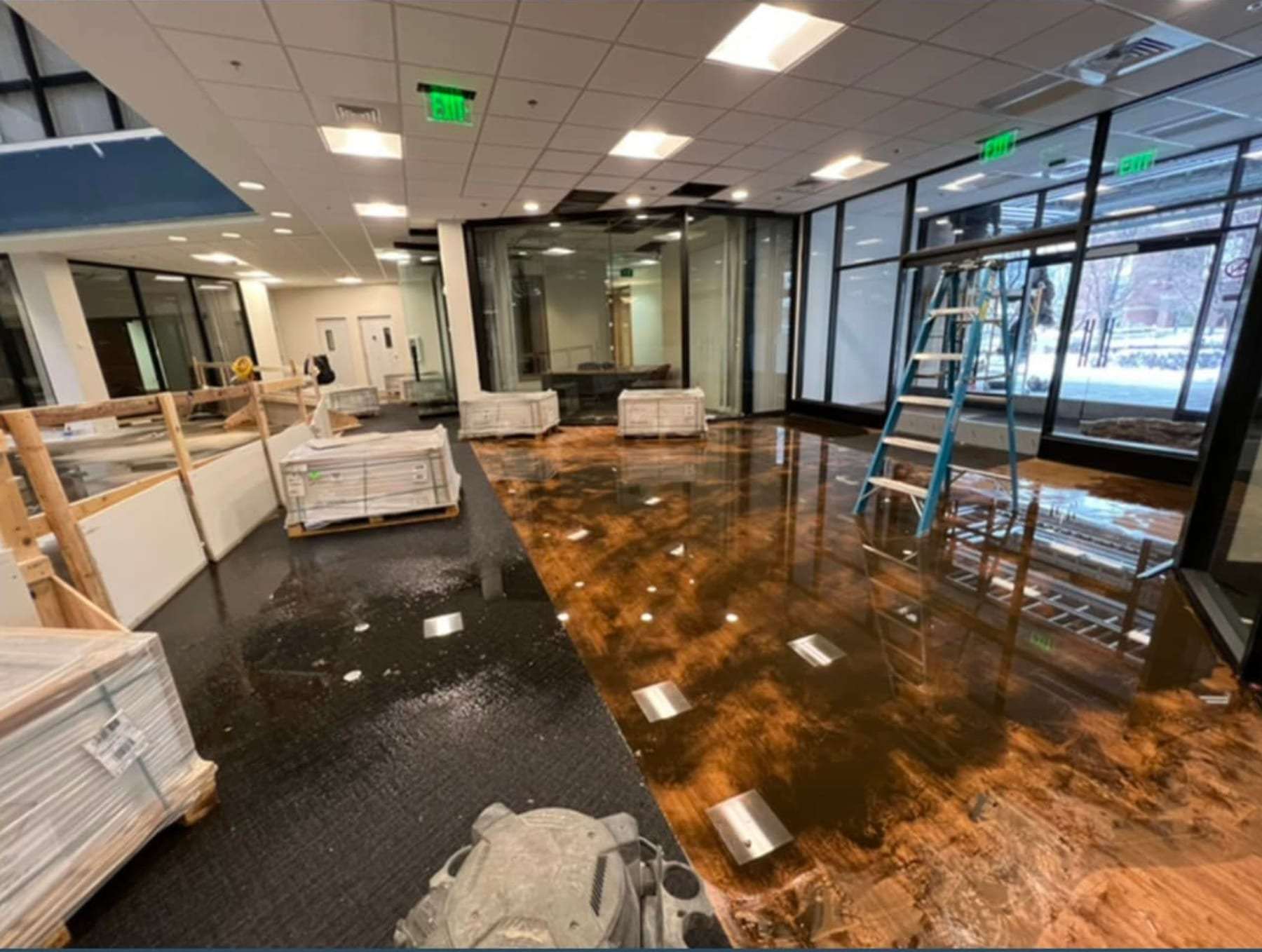
Flooded commercial office floor with standing water during cleanup. Example of the work involved; the photo does not show a specific property or a job for this site.
Reading what the ceiling is telling you
First confirm the water source is off. Then match what you see.
- IfA brown stain, dry to the touch, no sagThenWater passed through earlier. Mark the edge with a pencil and have it checked with a moisture meter; it may be wet above even if the surface feels dry.
- IfActive dripping from one spot, ceiling flatThenPut a bucket under it, move belongings and keep the area clear. Water is finding a seam or nail hole.
- IfA bubble or bulge in paint or drywallThenWater is pooling above. Keep the room clear. Some people pierce a small hole at the lowest point to drain it into a bucket, standing to the side, but only if the ceiling is not cracked and no light fixture is nearby.
- IfWater running out of a light fixture or fanThenShut that circuit off at the panel if it is safe to reach and leave the fixture alone. An electrician should check it before power is restored.
- IfCracks, loose sections or pieces fallingThenLeave the room and close the door. Do not try to drain or prop it.
What usually happens next
Find the break
A plumber opens the ceiling or the floor above to reach the failed line. The repair opening is often the first part of the ceiling removed.
Map the wet area
Moisture meters and thermal cameras show how far water traveled along joists, which can be well past the visible stain.
Remove what cannot dry
Drywall that sagged or held standing water is usually cut out. Wet insulation above the ceiling generally comes out as well, since it holds water and dries poorly.
Dry the cavity
With the ceiling opened, air movers and dehumidifiers can reach the joists and subfloor above. Readings should be taken until the framing is back to normal levels.
Rebuild
New drywall, texture and paint come last, after the framing is confirmed dry.
Why the stain is rarely the whole story
Water from an upstairs bathroom or a frozen line in an exterior wall travels sideways along joists and the top of drywall before it drips. In older Denver homes with plaster ceilings, it can spread across the lath and come through far from the source. That is why a careful moisture map matters before anyone decides how much ceiling to remove.
Take photos and video before anything is cut, including close-ups of the stain edges and wide shots of the room. Those images help an adjuster understand the damage after the ceiling has already been opened.
General information for Denver, not a quote or professional advice. In an emergency, call 911.